
Buy LSD infused paper online
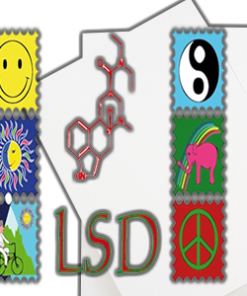
LSD infused paper (most commonly known as blotter paper or blotter art) is the classic and most prevalent medium used for distributing Lysergic Acid Diethylamide. Because active doses of LSD are microscopic—measured in micrograms ($\mu\text{g}$)—the drug requires a highly precise physical carrier to be divided and consumed safely.
Technical and Physical Characteristics
1. The Absorbency Medium
Blotter paper is typically made from highly absorbent, chemical-free cotton or wood pulp fibers, often referred to as “blotting paper.” Unlike standard printing paper, it contains no glossy coatings or heavy binders, allowing it to soak up liquid solutions evenly.
The paper is pre-perforated into a grid of tiny squares called tabs (usually measuring $1/4 \text{ inch} \times 1/4 \text{ inch}$ or $6.35 \text{ mm} \times 6.35 \text{ mm}$).
2. The Infusion Process
To manufacture blotter paper, crystalline LSD is dissolved in a volatile solvent, usually high-proof ethanol or an alcohol-water blend. The solution is applied to the paper using two primary methods:
-
The Dipping Method: An entire sheet of perforated paper is completely submerged in a calibrated liquid bath until it is fully saturated, then hung to dry in a dark, climate-controlled environment.
-
The Pipette/Dropper Method: A precise volume of liquid is dropped onto each individual square using a micropipette to ensure exact dosing per tab.
As the solvent completely evaporates, it leaves the microscopic chemical crystals securely embedded within the porous paper fibers.
Dosing and Chemical Potency
A standard single tab of blotter paper typically contains anywhere from $50 \mu\text{g}$ to $150 \mu\text{g}$ of active LSD, though potency varies wildly due to the complete lack of quality control in illicit manufacturing.
Because the human threshold for feeling the effects of LSD is incredibly low ($\sim 20 \mu\text{g}$), even minor miscalculations during the liquid dilution phase can lead to tabs that are unexpectedly potent.
Public Health & Modern Risks: The “NBOMe” Issue
The most significant physical hazard associated with modern street-level blotter paper is the introduction of synthetic counterfeits.
Because LSD is difficult and expensive to synthesize, illicit manufacturers frequently substitute it with cheaper, highly toxic synthetic research chemicals—most notably compounds from the NBOMe family (such as 25I-NBOMe, known on the street as “N-Bomb”).
| Attribute | Authentic LSD Paper | NBOMe Counterfeit Paper |
| Taste Profile | Completely tasteless and odorless (the paper or ink may have a faint metallic hint, but the drug itself has no flavor). | Intensely bitter, chemical taste; often causes an immediate numbing sensation on the tongue and gums. |
| Physical Safety | Physically forgiving; lethal overdoses are extraordinarily rare, though psychological distress can be severe. | Highly toxic. Can cause sudden, fatal physical complications including severe vasoconstriction, cardiac arrest, seizures, and organ failure at common recreational doses. |
| Ingestion Route | Active whether absorbed through the mouth (sublingually) or swallowed directly into stomach acid. | Chemically destroyed by stomach acid; only active if held in the mouth against mucous membranes. |
Cultural Context: Blotter Art
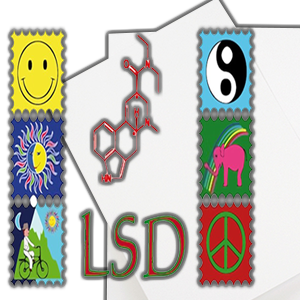
Over decades, blotter paper evolved into a highly distinct underground art form. Large sheets (frequently $7.5 \text{ inches} \times 7.5 \text{ inches}$, containing 900 tabs) are printed with intricate designs, pop-culture imagery, spiritual motifs, or geometric patterns using vegetable-based inks before perforation.
Many collectors purchase un-infused (“vanity”) blotter sheets purely for their historical and aesthetic value within the counterculture art movement.
Clinical Research Alternatives
While street-level infused paper remains strictly illegal and unregulated, modern clinical psychiatry has shifted toward alternative delivery methods for research. In ongoing clinical trials evaluating lysergamides for Generalized Anxiety Disorder (GAD) and severe depression, researchers primarily utilize orally disintegrating tablets (ODTs) or precise, laboratory-grade liquid solutions to guarantee sterile, uniform microgram dosing.
| A4 | 1 A4, 2 A4, 5 A4, 10 A4 |
|---|
Be the first to review “Buy LSD Infused Paper Online”
Related products


K2 lIQUIDS ON PAPER


K2 lIQUIDS ON PAPER

K2 lIQUIDS ON PAPER
K2 lIQUIDS ON PAPER
K2 lIQUIDS ON PAPER
K2 lIQUIDS ON PAPER
K2 lIQUIDS ON PAPER


K2 lIQUIDS ON PAPER
Reviews
There are no reviews yet.